PTFE Tape: Properties, Uses and Industrial Applications
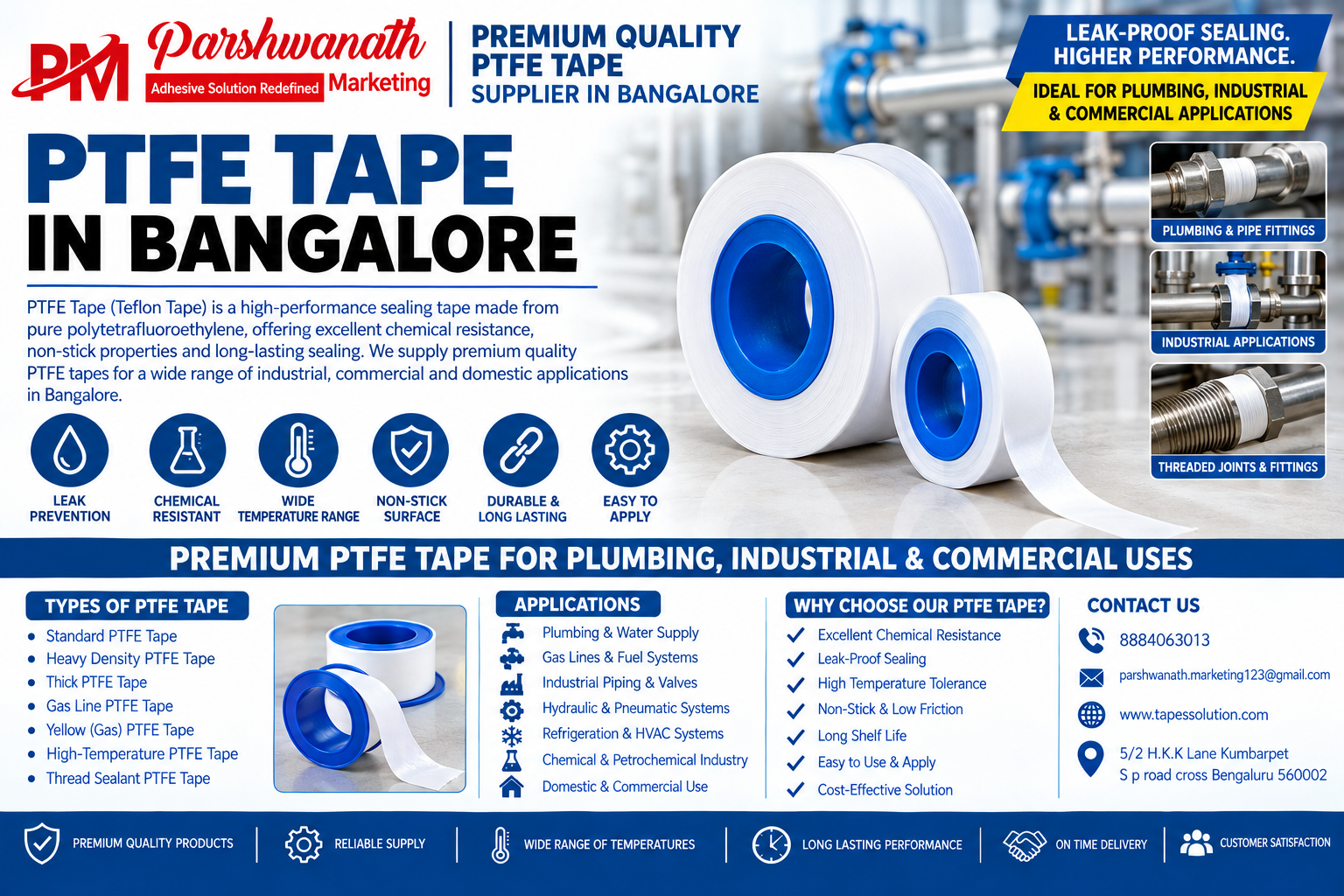
PTFE tape is a high-performance tape widely used in industrial, electrical, manufacturing and engineering applications. Also known as Teflon tape, PTFE tape is valued for its excellent resistance to heat, chemicals, moisture and friction. These properties make it suitable for demanding environments where conventional tapes may not provide the required performance.
From electrical insulation to industrial processing, PTFE tape offers reliable performance across a wide range of applications.
What Is PTFE Tape?
PTFE stands for Polytetrafluoroethylene, a synthetic fluoropolymer known for its non-stick properties, chemical resistance and high-temperature stability. PTFE tape is manufactured using PTFE material in a thin, flexible form and can be available with or without an adhesive backing depending on the intended application.
Its smooth surface and low coefficient of friction make it useful for applications where materials need to move, slide or separate without excessive friction.
Properties of PTFE Tape
1. High Temperature Resistance
PTFE tape can withstand high temperatures, making it suitable for applications involving heat and thermal exposure. This property is particularly useful in industrial machinery and manufacturing environments.
2. Excellent Chemical Resistance
PTFE has strong resistance to many chemicals, acids and solvents. This makes PTFE tape useful in chemical processing and industrial environments where exposure to aggressive substances may occur.
3. Low Friction
One of the key characteristics of PTFE is its extremely low friction. The smooth surface helps reduce resistance between moving surfaces and can support applications involving sliding and release.
4. Electrical Insulation
PTFE is a good electrical insulator. PTFE tape can therefore be used in selected electrical and electronic applications where insulation and resistance to environmental conditions are required.
5. Moisture Resistance
PTFE has very low moisture absorption. This makes it useful in applications where exposure to water, humidity or moisture could affect conventional materials.
6. Non-Stick Surface
The non-stick characteristics of PTFE make the material useful for release and surface-protection applications. It can help prevent materials from sticking to equipment and surfaces.
Uses of PTFE Tape
1. Electrical Insulation
PTFE tape is used in electrical applications where insulation, temperature resistance and reliable performance are important.
2. Industrial Machinery
PTFE tape can be used in machinery and equipment where low friction and wear resistance are required.
3. Chemical Processing
Because of its chemical resistance, PTFE tape is suitable for various chemical processing environments and equipment applications.
4. Manufacturing Equipment
PTFE tape is used in manufacturing processes where heat resistance, release properties and surface protection are required.
5. Automotive Applications
PTFE-based tapes can be used in selected automotive manufacturing and maintenance applications where resistance to heat, chemicals and friction is beneficial.
6. Pipe and Thread Applications
PTFE thread-sealing tape is commonly used on threaded pipe connections to help create a reliable seal. It is important to select the correct grade and type depending on the application.
Industrial Applications of PTFE Tape
PTFE tape is used across several industries because of its combination of thermal, chemical and electrical properties.
Chemical Industry
PTFE tape can be used around equipment and processes exposed to chemicals, solvents and corrosive substances.
Electrical and Electronics Industry
Its electrical insulation properties make PTFE suitable for certain wires, components and electrical assemblies.
Food Processing Industry
PTFE's non-stick characteristics and temperature resistance make PTFE-based materials useful in selected food-processing equipment and manufacturing applications where the appropriate grade is required.
Automotive Industry
PTFE tape can be used in manufacturing and maintenance applications requiring low friction, heat resistance and chemical resistance.
Engineering and Manufacturing
Industrial machinery and production equipment can benefit from PTFE tape where surface protection, release properties or reduced friction are required.
Benefits of PTFE Tape
- Excellent chemical resistance
- High-temperature resistance
- Low friction
- Good electrical insulation
- Excellent moisture resistance
- Non-stick surface
- Flexible and easy to apply
- Suitable for demanding industrial environments
- Helps reduce friction and surface wear
- Available in different thicknesses and widths
How to Choose the Right PTFE Tape
The correct PTFE tape should be selected according to the application. Important factors include thickness, width, adhesive type, temperature requirements, chemical exposure and surface material.
For electrical applications, insulation properties and temperature resistance should be considered. For industrial machinery, friction, heat and chemical resistance may be more important. For pipe-thread sealing, a suitable PTFE thread-sealing tape should be selected rather than an adhesive PTFE tape intended for another purpose.
PTFE Tape in Bangalore
Businesses searching for PTFE tape in Bangalore can choose from different types and specifications based on their industrial requirements. PTFE tape is suitable for manufacturing, electrical, engineering, automotive, chemical and maintenance applications.
Working with a reliable PTFE tape supplier can help businesses select the appropriate thickness, width and grade for their specific application.
Conclusion
PTFE tape is a versatile industrial material known for its heat resistance, chemical resistance, low friction, moisture resistance and electrical insulation properties. These characteristics make it useful across electrical, automotive, chemical, manufacturing and engineering applications.
By selecting the appropriate PTFE tape according to the operating temperature, surface, chemical exposure and application requirements, industries can achieve reliable performance and long-term durability.